
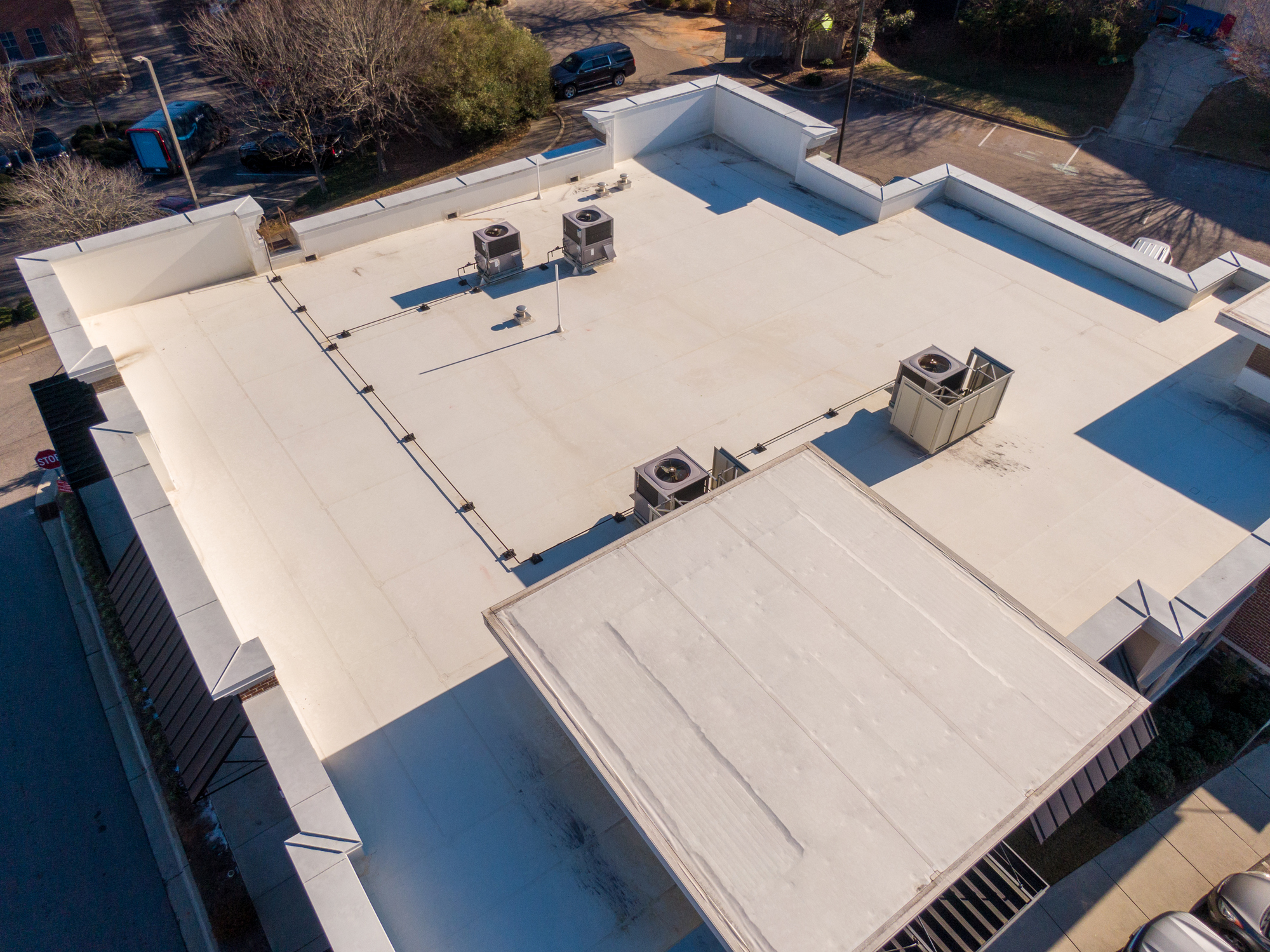
For commercial building owners, developers, and facility managers in Florida, commercial flat roof construction is far more than a structural necessity—it is a strategic asset. In a state defined by intense UV radiation, tropical humidity, and the seasonal threat of high-velocity hurricanes, a “standard” roofing approach simply won’t suffice.
Selecting the right flat roofing system is a complex decision that impacts long-term operational costs, energy efficiency, and building safety. This guide explores the unique challenges of the Florida climate and evaluates the top roofing systems to help you make an informed investment for your commercial property.
Environmental Challenges for Your Roof
Before comparing materials, it is essential to understand the environmental stressors unique to Florida.
Heat and UV Exposure: The Invisible Degradation
Florida’s sun is relentless. Intense UV exposure causes many traditional roofing materials to become brittle and crack over time, a process known as thermal degradation.
- The Solution: Reflective “cool roofs” are essential. Systems that reflect solar energy rather than absorbing it keep the building cooler and protect the roof membrane from premature aging.
Heavy Rain and Drainage: Defeating Ponding Water
Florida experiences some of the highest annual rainfall in the U.S. On a flat roof, poor drainage leads to ponding water, which adds immense weight to the structure and accelerates leaks.
- The Solution: Selecting a system that accommodates proper slope design, robust internal drains, and oversized scuppers is non-negotiable for Florida commercial builds.
Hurricanes and High Wind Zones: Meeting the Code
From the Panhandle to the Keys, wind uplift is a primary concern. The Florida Building Code (FBC), particularly in High-Velocity Hurricane Zones (HVHZ), mandates strict attachment protocols.
- The Solution: Your system must have a proven Wind Uplift Rating and utilize specific fastening or adhesion methods to remain intact during a tropical storm.
Humidity and Moisture Control: Preventing Internal Rot
High humidity creates a constant vapor pressure differential between the interior and exterior of the building. If moisture becomes trapped within the roof assembly, it can lead to mold growth and “wet insulation,” which destroys R-value.
- The Solution: Proper installation of vapor barriers and high-quality insulation (like polyiso) is critical to the system’s integrity.
Common Commercial Flat Roofing Systems
Several systems have risen to the top as the “gold standards” for Florida’s unique environment.
TPO (Thermoplastic Polyolefin): The Efficiency Leader
TPO is the most popular choice for modern Florida warehouses and retail centers. It is a single-ply reflective membrane that offers high solar reflectivity.
- Why it works: Its heat-welded seams are incredibly strong, and the white surface can reduce roof temperatures by up to 50–60°F.
Metal Roofing: The Durability Champion
Metal is a premier choice for Florida businesses prioritizing longevity and hurricane resistance. It is exceptionally resilient in coastal and high-wind zones.
- Why it works: With a lifespan of up to 70 years and superior wind uplift ratings, it is often the most cost-effective choice over the long term.
Tile Roofing: The Aesthetic Asset
Tile is a hallmark of Florida architecture, especially for high-end retail, hospitality, and multi-family commercial builds.
- Why it works: Beyond its beauty, concrete and clay tiles are naturally fire-resistant and provide a “thermal mass” that helps regulate indoor temperatures. Properly anchored tile systems are engineered to withstand wind speeds of 150+ mph.
Shingle Roofing: The Versatile Multi-Tasker
High-performance architectural shingles are an ideal, cost-effective solution for commercial properties with sloped rooflines or multi-building complexes like apartments.
- Why it works: Modern asphalt shingles are engineered for high-wind resistance (rated up to 130 mph) and provide a professional, uniform look that matches a variety of architectural styles.
PVC (Polyvinyl Chloride): The Industrial Powerhouse
Often used in environments with grease or chemical exposure (like restaurants), PVC is a premium membrane known for extreme durability.
- Why it works: It holds up exceptionally well against ponding water and provides superior chemical resistance compared to TPO.
Finding the Best Value for Your Build
To help you decide, we have categorized these systems by the factors that matter most to your bottom line.
| System | Expected Lifespan | Energy Efficiency | Maintenance | Best For |
| TPO | 15–25 Years | Excellent | Low | Retail, Warehouses |
| Metal | 40–70 Years | High (with coatings) | Low | Offices, High-Wind Zones |
| PVC | 20–30 Years | Excellent | Low | Restaurants, Industrial |
| Tile | 50+ Years | High (Thermal Mass) | Moderate | Multi-family, High-end Retail |
| Shingle | 20–30 Years | Moderate | Moderate | Apartments, Sloped Offices |
Energy Performance: Slashing Your Cooling Costs
In Florida, the “Cool Roof” effect is not just an environmental choice but also a financial one. A white TPO or PVC roof can reduce roof surface temperatures by up to 50–60°F compared to dark materials. This directly reduces the workload on your HVAC systems, extending their life and lowering utility bills.
Total Cost of Ownership: Thinking Beyond the Bid
While TPO offers a lower upfront cost, a metal or PVC roof might offer a lower TCO over 30 years due to its longevity and lower repair frequencies. Always ask for a lifecycle cost analysis rather than just a “per square” bid.
Navigating the Florida Building Code and Local Rules
Florida has the most stringent building codes in the United States.
- Miami-Dade NOA: Many coastal projects require a “Notice of Acceptance” (NOA), proving the roofing system has passed rigorous high-wind testing.
- Warranty and Inspection Compliance: State law requires specific inspection intervals during the installation of a commercial roof to ensure the deck, insulation, and membrane are properly attached. Furthermore, manufacturer warranties often require specific “No Dollar Limit” (NDL) terms to cover the building adequately.
Choosing Your Property’s Best Fit
Before committing to a system, evaluate these three factors:
- Building Use and Foot Traffic: Does your facility house a restaurant (needs PVC for grease)? If your roof will have frequent foot traffic for HVAC maintenance, a thicker TPO membrane or a standing seam metal system is preferred over standard shingles.
- Structural Capacity: Heavier systems like Tile require specific structural support. For retrofits where weight is a concern, lightweight single-ply membranes (TPO/PVC) or Metal are often the best candidates.
- New Construction vs. Reroofing: Florida law generally limits you to two layers of roofing. If you already have two, a total “tear-off” is required, which may change your budget and system choice.
Why Your Contractor is Part of the System
A high-quality material is only as good as its installation. When selecting a contractor, look for these credentials:
- Manufacturer Certifications: Certifications by major membrane manufacturers ensure access to industry-leading materials and exclusive warranties.
- Florida-Specific Knowledge: Florida’s humidity requires specific knowledge of “dew points” during installation to ensure moisture isn’t trapped under the membrane.
- Key Questions for Your Roofer: Are you licensed, bonded, and insured specifically for commercial work?
- Do you have experience with Miami-Dade NOA requirements?
- What is your plan for business continuity during the install?
Protecting Your Success with the Right Roof
A commercial flat roof construction in Florida is a strategic investment, not a short-term fix. While it is tempting to choose the system with the lowest initial bid, the combination of hurricane risks and cooling costs makes quality and reflectivity the smarter long-term choices.
By aligning your material choice with the specific needs of your building’s use and Florida’s climate, you can turn a necessary expense into a source of long-term operational savings. At Farmers Commercial Roofing, we specialize in helping Florida businesses choose and install the systems that stand the test of time.
Don’t leave your property’s safety to chance.