
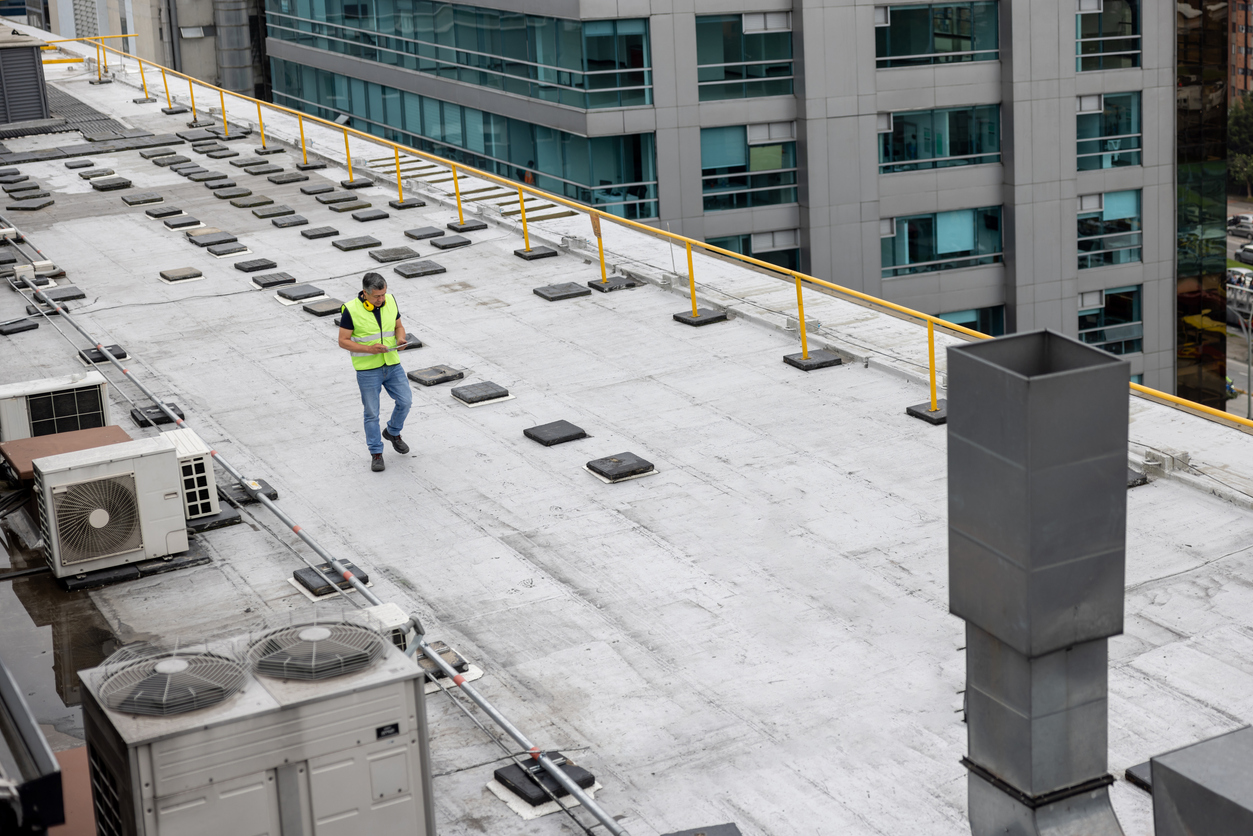
At Farmers Commercial Roofing, we deliver accurate and thorough commercial roof inspections designed to extend the life, performance, and safety of your roofing system. Whether you’re dealing with visible leaks, early signs of wear, or simply planning for the future, our expert technicians provide comprehensive solutions, including infrared scanning to detect trapped moisture, that protect your investment and improve long‑term efficiency.
Why Regular Roof Inspections Matter
Your commercial roof does more than just cap your building. It protects your staff, equipment, and operations from Florida’s extreme weather. Over time, constant exposure to rain, wind, UV rays, and storm events can weaken even the toughest roofing systems. Left unchecked, what started as a minor issue can quickly escalate into water intrusion, damaged insulation, skyrocketing energy costs, and premature roof replacement.
By scheduling professional inspections on a regular cycle, you identify potential issues early, mitigate repair costs, and extend the service life of your roof. At Farmers Commercial Roofing, we emphasize proactive maintenance so you’re not reacting once the damage has already occurred.
How Often Should You Inspect a Commercial Roof?
In Florida’s climate, commercial roofs face constant exposure to high UV levels, heavy rainfall, and frequent storm activity. That means once-a-year inspections aren’t enough—especially if you want to maximize lifespan and avoid expensive emergency repairs.
We recommend the following inspection schedule:
- Twice per year: Ideally in spring and fall, to assess post-winter wear and pre-storm season readiness.
- After major weather events: Hurricanes, hailstorms, or severe thunderstorms can cause hidden damage, even if there are no immediate signs of leaks.
- Before major repairs or renovations: If you’re planning HVAC upgrades or structural changes, a roof inspection ensures compatibility and prevents future conflicts.
Prior to warranty expiration: A final inspection before your warranty ends can help you flag and address any covered issues.
Pre‑Inspection Preparation
Before we step onto your roof, we gather the context needed to perform an effective inspection:
- Review prior inspection reports, repair documentation, and warranty data.
- Note any known trouble zones (e.g., previous leak locations, roof penetrations, stagnation areas).
- Confirm the roof is clear of debris, vegetation, and large equipment so our team can inspect every area safely.
- Schedule inspection timing with respect to weather, especially after major storms when damage can accelerate.
This preparation ensures we’re working from a full understanding of your roofing system and its history.
Comprehensive Roof Surface & Membrane Inspection
Once on the roof, we methodically examine all critical conditions:
- Membrane condition: Look for cracks, punctures, exposed substrate, blisters, or consolidation of roofing material (TPO, PVC, EPDM, metal, etc.).
- Water ponding: Areas of standing water or slow drainage are red flags—especially on flat or low‑slope roofs.
- Surface wear: UV damage, granule loss (for built‑up or shingle systems), corrosion on metal roofing, and signs of excessive aging.
- Infrared scanning for trapped moisture: Using thermal imaging technology, we identify hidden wet insulation or saturation under roofing materials. This is an invisible threat that can compromise your system.
Including the infrared scan gives our clients a full picture—not just what’s visible on the surface—so we can target issues precisely rather than guessing.
Flashings, Seals & Joint Review
Water typically enters a building through the smallest gaps. That’s why every flashing, joint, roof‐to‑wall transition, and equipment penetration gets close scrutiny:
- Inspect flashing around skylights, HVAC units, vents, chimneys, and parapet walls for separation, rust, gaps or breaks.
- Examine seals and overlaps at membrane transitions and edge terminations.
- Check that different roofing materials meet correctly at transitions or curbs.
These are among the most common zones of failure—professional maintenance here can dramatically reduce risk.
Drainage & Roof Penetrations
Efficient drainage and controlled roof penetrations matter just as much as the membrane itself:
- Clear and inspect gutters, scuppers, and downspouts for blockages or damage.
- Evaluate interior roof drains for signs of backup or inadequate capacity.
- Look for signs of interior water stains, mold, or ceiling damage from penetration leaks.
- Examine HVAC chases, electrical conduit entries and roof curbs to ensure they’re sealed and meeting code.
Good drainage keeps the roof surface dry; dry surfaces mean fewer structural and insulation problems over time.
Insulation, Deck & Structural Check
We also assess the layers beneath the roof membrane:
- Check for wet or sagging insulation, deteriorated wood decking, or corrosion in metal decks.
- Note ventilation performance—blocked or inefficient ventilation can lead to moisture buildup and faster roof aging.
- Look for structural irregularities: sagging decks, joist signs of stress, or older installations that may need attention.
Using infrared scanning, we can see where moisture may have compromised insulation or deck layers without unnecessary destruction.
Roof Edge & Perimeter Details
The perimeter of your roof is often overlooked, yet it’s a zone prone to damage:
- Inspect parapet walls, copings, coping caps for rusting, separation or membrane detachment.
- Check roof edge metal flashing for corrosion, warping or improper attachment.
- Verify that roofing membrane termination is intact and resilient at the edges.
Wind uplift, rain splashback, and day‑to‑day weathering often start problems at the roof’s edges—early action here protects the whole system.
Documentation & Actionable Reporting
After inspection, we deliver an organized, easy‑to‑understand report designed for decision‑making:
- Full photo documentation of the roof surface, edge details, penetrations, and infrared anomalies.
- Clear summary of deficiencies, ranked by urgency, and linked to potential cost implications.
- Recommendations for repairs, maintenance, or monitoring—aligned with your budget and asset goals.
- Option to integrate findings into our tailored maintenance plan for ongoing roof health.
This documentation not only supports maintenance but also helps lifecycle budgeting and warranty compliance.
Protect Your Investment. Schedule a Roof Inspection Today!
A well‑maintained roof is a safe roof. It prevents costly disruptions, extends service life, and safeguards your operation. At Farmers Commercial Roofing, we combine reliable inspections, advanced technologies like infrared scanning, and tailored maintenance plans to deliver real results.
Ready to get started? Contact our team today for a free roof inspection consultation and take proactive steps to protect your building, budget, and future.
FAQs
How often should a commercial roof be inspected?
At minimum once per year—but in Florida’s climate we recommend twice yearly, especially pre‑ and post‑storm season.
What does infrared scanning add to a standard inspection?
Infrared scanning detects moisture hidden beneath the membrane, insulation or deck. These are conditions that would otherwise go unnoticed until damage is more extensive.
Can I perform self‑inspections instead of hiring a professional?
You can, but professional inspections provide deeper visibility, especially with infrared tools and structural evaluations, which we include as standard.
What’s included in your maintenance program?
Our program includes scheduled inspections, infrared scans for hidden moisture, debris removal, roof system audits after major weather events, and tailored reports.
What happens after you find a defect?
We’ll propose repair options, either immediate or scheduled, based on urgency, and those can integrate seamlessly into your maintenance program or re‑roofing planning